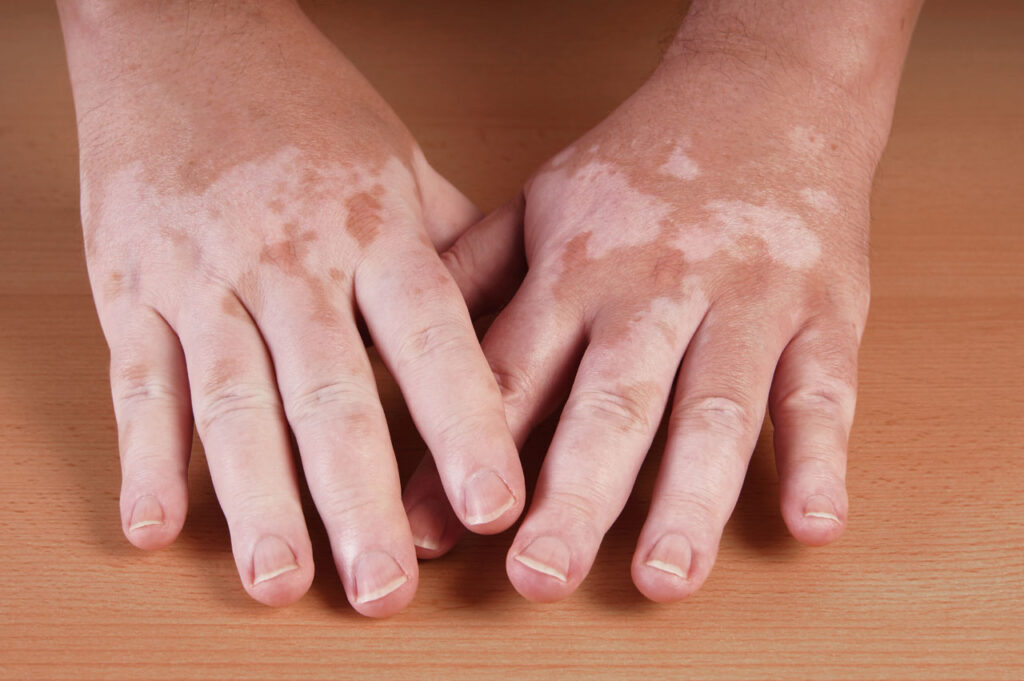
The words vitiligo and leucoderma are commonly used to describe conditions involving loss of skin pigmentation.
In medical literature, vitiligo is the term most often used for depigmentation associated with reduced melanin function.
No. Pigmentation changes are not contagious and cannot spread through touch, proximity or shared objects.
In some individuals, a genetic predisposition may be present. However inheritance alone does not determine whether pigmentation changes will occur.
No. Pigmentation changes are not caused by lack of cleanliness. Diet may influence general health but is not the direct cause of pigment loss.
Prolonged emotional or physical stress may influence pigmentation in some individuals. Its role varies widely.
It does not generally affect physical health or lifespan though emotional wellbeing may be impacted.
In some individuals it remains stable while in others it may evolve gradually. The course cannot be predicted.
The term vitiligo is commonly used in medical and public contexts to refer to loss of melanin in patches of the skin. Leucoderma is another term sometimes used more broadly for depigmentation, though scientific context varies. This platform uses the term skin pigmentation changes to focus on understanding and awareness rather than labels.